
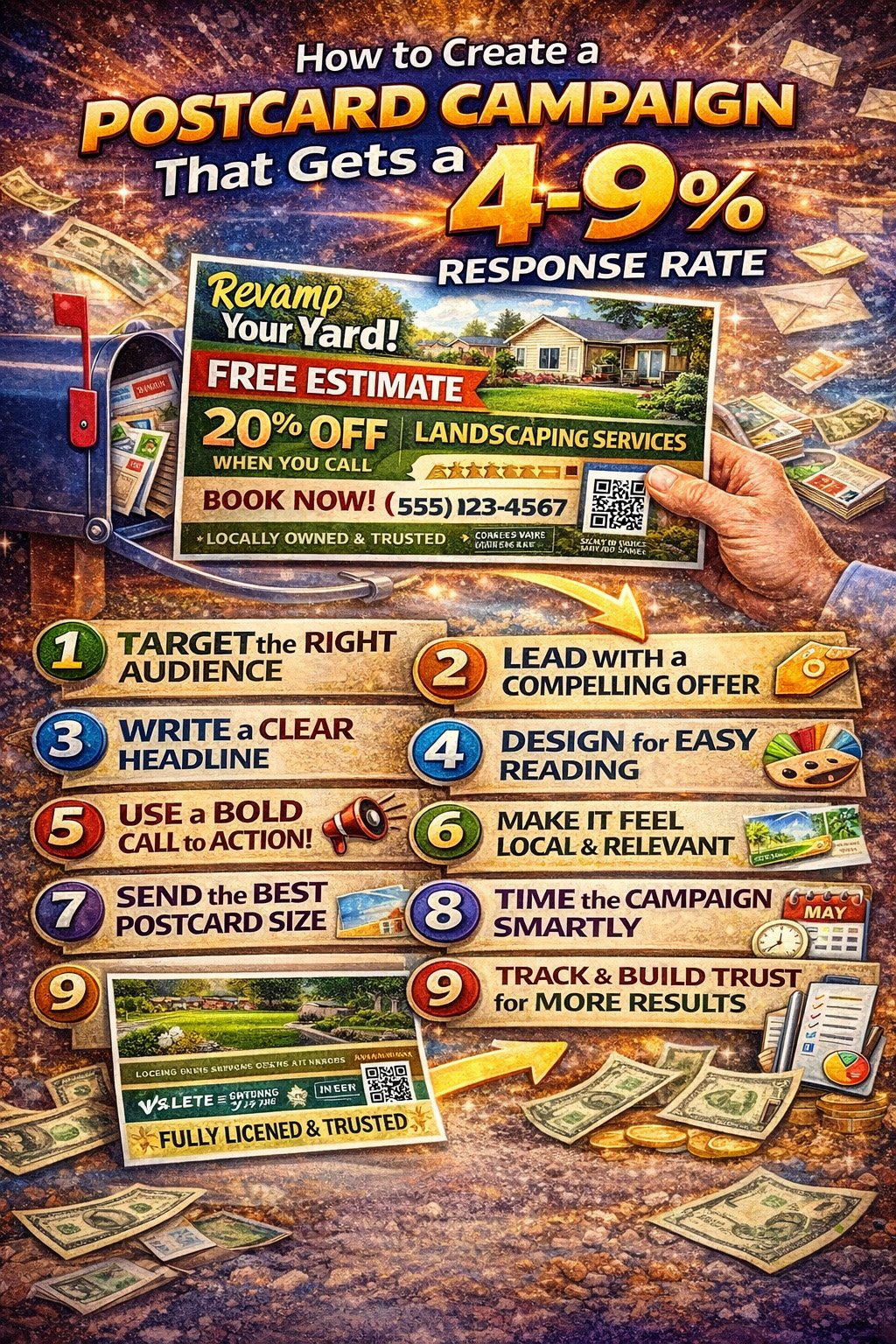
Businesses do not send postcards just to fill mailboxes. They send them to generate attention, leads, sales, appointments, and long-term customer growth. The real question is not whether postcard marketing works. The real question is how to create a postcard campaign that performs well enough to make a measurable difference.
A strong campaign is never just about printing something attractive and mailing it out. High-performing direct mail campaigns are built on strategy. They combine the right audience, the right offer, the right design, and the right timing. When those elements work together, postcard marketing can produce impressive results and generate response rates that many digital channels struggle to match.
If your goal is to build a postcard campaign that gets a 4–9% response rate, the key is to focus on what makes recipients notice, trust, and act. Here is how to do it.
Start With the Right Audience
No postcard will perform well if it reaches the wrong people. Audience targeting is one of the most important factors in any successful campaign. Before you think about colors, headlines, or printing sizes, you need to know exactly who should receive your postcard.
Ask yourself:
- Who is most likely to need this offer right now?
- Which neighborhoods or zip codes make the most sense?
- Am I targeting current customers, past customers, or brand-new prospects?
- Does this message fit homeowners, renters, families, businesses, or another group?
The more relevant your audience, the stronger your response rate will be. A postcard sent to a carefully selected local market will usually outperform one sent too broadly. Relevance is what turns a generic mail piece into a meaningful opportunity.
Lead With a Clear and Compelling Offer
One of the biggest reasons postcard campaigns fail is weak offers. If the recipient does not immediately see a good reason to respond, the postcard becomes easy to ignore. A strong offer creates urgency, relevance, and motivation.
Good postcard offers often include:
- Discounts for first-time customers
- Free estimates or consultations
- Limited-time seasonal specials
- Exclusive neighborhood promotions
- Buy one, get one deals
- Bonus gifts or add-on services
The best offers are specific and easy to understand. Instead of vague language, make the value obvious. Recipients should instantly know what they get and why it is worth acting now.
Use a Headline That Gets Immediate Attention
In direct mail, attention happens fast. Most recipients glance at a postcard for only a few moments before deciding whether to keep reading or move on. Your headline has to do a lot of work in very little time.
A strong headline should communicate one main benefit clearly. It should not be clever at the expense of clarity. It should tell the reader why this postcard matters to them.
Effective headline styles include:
- Save 20% on Your First Service
- Local Homeowners: Get a Free Roof Inspection
- Grand Opening Specials This Weekend Only
- Claim Your Neighborhood Discount Today
The goal is simple: make the recipient stop long enough to want more information.
Keep the Design Clean and Easy to Scan
High-response postcard design is not about cramming in every detail. It is about creating a layout that feels clear, bold, and easy to process. People should be able to understand the postcard quickly without effort.
A clean postcard design usually includes:
- One strong headline
- One main offer
- One or two supporting visuals
- Simple body copy
- A clear call to action
- Readable contact information
Too much text, too many images, or too many competing messages can reduce response. The best postcards feel organized and intentional. They guide the eye naturally from headline to offer to action step.
Make the Call to Action Impossible to Miss
A postcard may get attention and create interest, but it will still underperform if the next step is unclear. Recipients need to know exactly what to do after reading your message.
Strong calls to action often use direct language such as:
- Call today for your free estimate
- Scan the QR code to book now
- Bring this card in for 15% off
- Visit our website to claim your offer
- Book before Friday to save
Your call to action should be easy to find, easy to understand, and easy to complete. The more friction you remove, the more likely people are to respond.
Use Local Relevance to Increase Response
Postcards perform especially well when they feel local and personal. People respond more often when they believe a message is relevant to their area, their needs, and their daily life. This is why localized marketing often outperforms generic promotions.
You can make postcards feel more relevant by including:
- Neighborhood-specific language
- City or community names
- Offers tailored to local weather or seasonal needs
- Photos or references that feel familiar to the area
- Local trust signals such as reviews, awards, or years serving the community
When people feel the message was made for them, response becomes much more likely.
Choose the Right Postcard Size
Size can make a difference in response because larger postcards stand out more in the mailbox. A bigger format often gives you more room for strong visuals, better readability, and a more professional appearance.
While smaller postcards can still work, larger cards often perform better because they are harder to ignore. If your goal is maximum visibility, a bigger postcard can help you make a stronger first impression.
The key is not just size for the sake of size. It is using that extra space wisely so the design feels bold rather than cluttered.
Time the Campaign Carefully
Timing can significantly affect postcard performance. A strong campaign should arrive when the offer is most relevant. For example, a landscaping postcard may work best in spring, a furnace checkup offer may perform best in fall, and a holiday promotion may perform best just before the shopping season begins.
Timing also matters for urgency. Limited-time promotions tend to perform better when the deadline is realistic but not too far away. A postcard that feels timely encourages faster decisions.
In many cases, repeated mailings work better than a single drop. The first postcard builds awareness. The second reinforces it. The third often catches people when the need becomes immediate.
Track Responses So You Know What Works
Businesses that get strong results from postcard marketing usually track their campaigns carefully. If you do not measure response, it becomes much harder to improve future mailings.
Common tracking methods include:
- Unique phone numbers
- Promo codes
- QR codes
- Dedicated landing pages
- Offer-specific URLs
- In-store coupon redemption
Tracking shows you which offers, designs, audiences, and neighborhoods perform best. That information can help you raise response rates over time and improve overall direct mail ROI.
Build Trust Into the Postcard
Trust influences action more than many businesses realize. A postcard that looks credible and professional is more likely to convert than one that feels generic or uncertain. Recipients want to feel confident that the business is legitimate and worth contacting.
Trust-building elements may include:
- Customer testimonials
- Years in business
- Guarantees or warranties
- Professional certifications
- Locally owned messaging
- Clear branding and polished design
These details make the postcard feel more believable, and that can be the difference between interest and action.
What High-Response Campaigns Have in Common
Postcard campaigns that perform in the 4–9% range often share the same strengths:
- A sharply targeted audience
- A valuable and relevant offer
- A bold, clear headline
- A clean, readable layout
- A strong call to action
- Good timing and repeated exposure
- Easy response tracking
None of these factors work as well alone as they do together. High response is usually the result of strategic alignment, not luck.
Final Thoughts
A postcard campaign that gets a strong response rate is built intentionally. It reaches the right people with the right message at the right time and makes action feel easy. That is what separates postcards that get tossed aside from postcards that generate real business results.
At BigPostcards.net, successful postcard marketing is about more than print. It is about creating campaigns that get noticed, get remembered, and get results. When the offer is strong, the targeting is smart, and the design is built to convert, postcards can become one of the most effective tools in your marketing system.