
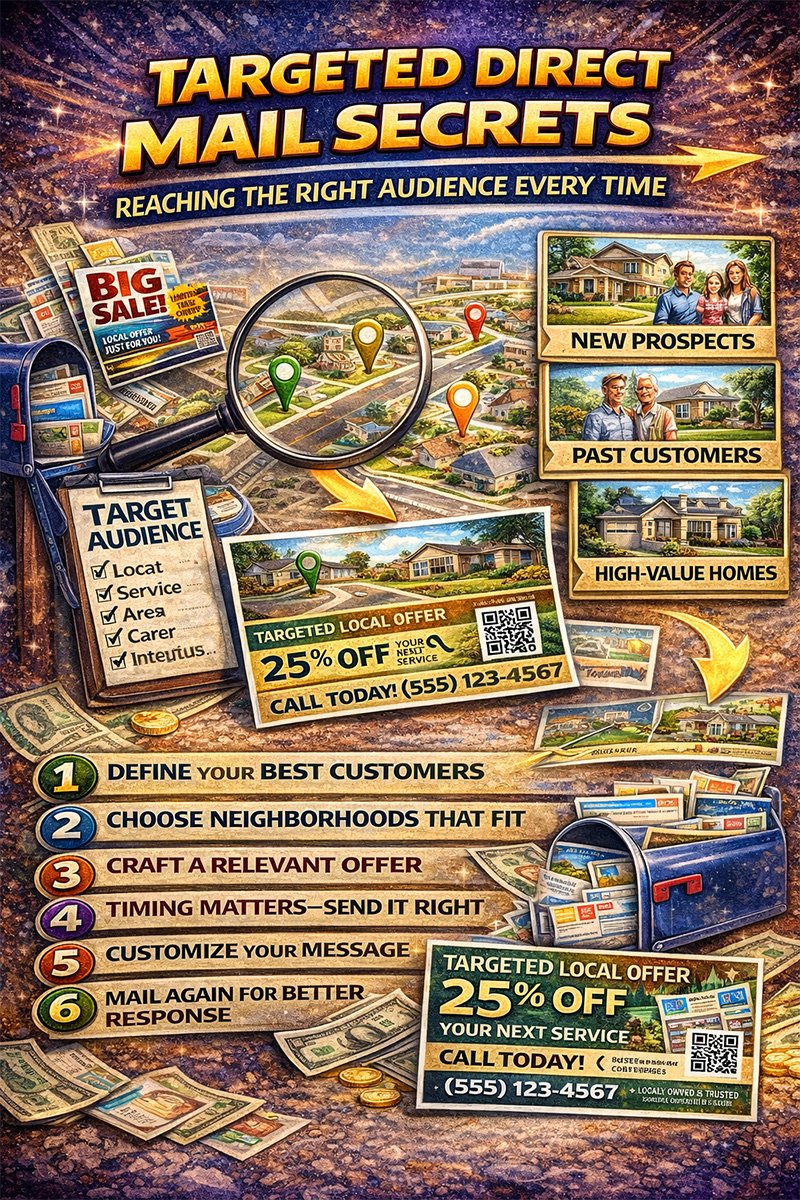
Direct mail is one of the most practical ways to get your message in front of real people, but not every campaign performs the same. Some postcards generate calls, appointments, and steady sales. Others disappear into the mailbox with very little response. The difference usually comes down to one thing: targeting.
A postcard can have strong design, high-quality printing, and a generous offer, but if it reaches the wrong audience, it will struggle to perform. On the other hand, even a simple mail piece can produce excellent results when it reaches the people most likely to care. That is why targeted direct mail remains one of the smartest marketing strategies for businesses that want better response and better return on investment.
The secret is not sending more mail. The secret is sending smarter mail. When you understand how to match your message to the right people, your campaigns become more relevant, more persuasive, and more profitable.
Why Targeting Matters So Much in Direct Mail
People respond when a message feels relevant. If a postcard arrives that matches a current need, solves a problem, or offers something useful in the recipient’s area, it has a real chance of getting attention. If it feels random, generic, or unrelated, it is far easier to ignore.
This is why audience selection is one of the biggest drivers of direct mail ROI. The closer your message matches the needs of the recipient, the more likely they are to read, remember, and respond. Relevance creates interest, and interest is what leads to action.
Smart targeting helps businesses stop wasting money on broad mailings that reach people outside the ideal market. Instead of hoping someone might be interested, targeted direct mail increases the odds that the right households or customers receive the right offer at the right time.
Start With a Clear Customer Profile
One of the best direct mail secrets is also one of the simplest: know exactly who you want to reach before you create the postcard. Many campaigns underperform because the business starts with design before it defines the audience.
A strong customer profile may include details such as:
- Location or service area
- Homeowner or renter status
- Family size or household type
- Age range
- Income level
- Past customer behavior
- Likely interest in specific services or offers
The better you understand your ideal customer, the easier it becomes to write a message that feels relevant and useful. A postcard should never feel like it was sent to “everyone.” It should feel like it was meant for someone specific.
Geographic Targeting Is a Powerful Advantage
One of the biggest strengths of postcard marketing is geographic precision. Businesses can target neighborhoods, zip codes, routes, or service areas that matter most to them. This makes direct mail especially effective for companies that depend on local customers.
Geographic targeting works well because it keeps the message close to the recipient’s world. A nearby business, a neighborhood offer, or a local service feels more relevant than a broad message coming from far away.
This is especially useful for:
- Home service providers
- Restaurants and local food businesses
- Dental and medical offices
- Retail stores and boutiques
- Real estate professionals
- Fitness and wellness businesses
When your business serves a specific area, targeted direct mail helps you put your brand exactly where it needs to be.
Use Different Offers for Different Audiences
A common mistake in direct mail is using one offer for every audience. Not all prospects respond to the same message. New customers may need an introductory incentive. Existing customers may respond better to loyalty rewards. Past customers may need a reactivation offer. High-value neighborhoods may respond better to premium positioning than heavy discounts.
This is where targeting becomes strategic. The more carefully you match the offer to the audience, the more likely the postcard is to convert.
For example:
- New prospects may respond to a first-time discount
- Past customers may respond to a welcome-back special
- Luxury homeowners may respond to quality and trust messaging
- Budget-conscious households may respond to savings-focused language
Good targeting is not just about where the postcard goes. It is also about what the postcard says once it gets there.
Timing Makes Targeting Even Stronger
The best direct mail campaigns do not just reach the right people. They reach them at the right moment. Timing can make a strong audience strategy even more effective because relevance increases when an offer matches what people need right now.
Seasonal timing is a great example. A landscaping postcard will often perform better in spring than in winter. A heating service offer may get better results in fall. A back-to-school promotion works best before the school season starts.
Timing also matters for life stages, events, and local patterns. A restaurant may mail a neighborhood coupon before a holiday weekend. A real estate agent may target homeowners when the local market is especially active. A home service provider may focus on neighborhoods after storms or during peak maintenance months.
Targeting becomes much more powerful when the message feels timely as well as relevant.
Past Customer Data Can Improve Results
One of the most valuable sources of targeting insight is your own customer base. Businesses often overlook the information they already have. Past customer data can reveal patterns that help improve future campaigns.
Useful patterns may include:
- Which neighborhoods produced the most customers
- Which offers performed best
- Which services are purchased most often
- How frequently customers return
- What times of year generate the most demand
By studying what has worked before, businesses can target more confidently and reduce guesswork. This helps direct mail become more strategic with every campaign.
Design Should Support the Targeting Strategy
Once you know who the postcard is for, the design should reflect that audience. A postcard meant for luxury homeowners should not feel cheap or cluttered. A postcard aimed at busy families should be quick and easy to scan. A mail piece for older homeowners may need larger text and a straightforward layout.
The design, tone, and imagery should all match the people receiving the card. This creates a stronger sense of fit. When the audience feels understood, trust rises. When trust rises, response usually follows.
Good targeting and good design work together. One helps the postcard reach the right people. The other helps it connect once it arrives.
Repetition Helps Build Familiarity
Another important secret of targeted direct mail is consistency. Many people do not respond the first time they see a business name. That does not mean the postcard failed. It may have created awareness that pays off later.
Repeated mailings to the same targeted audience help build familiarity. When recipients see your brand again and again in their mailbox, your business begins to feel established and recognizable. This is especially useful in competitive local markets.
The goal is not to overwhelm the audience. The goal is to stay visible enough that when the need appears, your business is already top of mind.
Track Results by Audience Segment
Businesses that want better results from direct mail marketing should track response by audience group whenever possible. This helps identify which neighborhoods, offers, and customer types perform best.
Tracking methods may include:
- Promo codes by area
- Unique phone numbers
- Segment-specific landing pages
- QR codes tied to specific mail drops
- Offer-specific coupons
Once you know which audiences respond best, you can focus more of your budget there and improve results over time. This is where targeted direct mail becomes a true system instead of a one-time campaign.
What Reaching the Right Audience Really Means
Reaching the right audience is not only about demographics or geography. It is about alignment. The right audience is the group most likely to care about your message, trust your business, and act on your offer. That alignment happens when several things work together:
- The audience fits the service or product
- The offer fits the audience’s needs
- The timing fits the moment
- The design fits the audience’s expectations
- The message feels relevant and easy to act on
When those pieces come together, direct mail stops feeling random and starts feeling precise.
Final Thoughts
Targeted direct mail works because relevance works. Businesses do not need to reach everyone to succeed. They need to reach the right people with the right message. When a postcard feels local, timely, useful, and clearly designed for the recipient, response becomes much more likely.
At BigPostcards.net, the real secret behind successful direct mail is not sending more pieces. It is sending smarter ones. When you target carefully, speak clearly, and track what works, direct mail becomes one of the most effective ways to connect with the right audience every time.